
 |
| Illustration by The Epoch Times, Shutterstock |
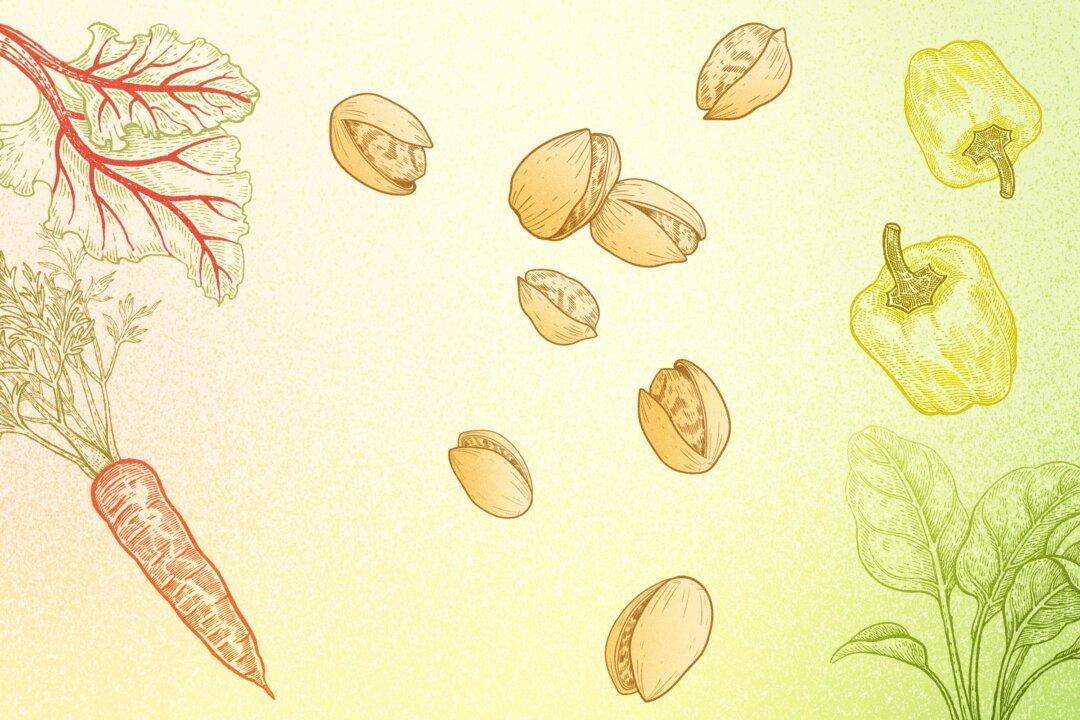
Urban dwellers often strain their eyes through constant phone scrolling and screen time, leading to blurry vision, dry eyes, and presbyopia. Pistachios, widely praised as an “eye-protecting snack,” have shown promise in supporting vision. Research has shown that eating 2 ounces of pistachios daily for 12 weeks can significantly increase macular pigment optical density, which helps protect against macular degeneration and related vision loss.
However, pistachios are just one piece of the eye health puzzle. A wide variety of lutein-rich superfoods can also offer powerful support for eye health and protection against screen-induced damage.
At the core of this protection is the macula—a crucial part of the retina responsible for sharp central vision. It depends on pigments like lutein and zeaxanthin, two carotenoids that absorb harmful blue light, provide antioxidant defense, and reduce oxidative stress in both the eyes and brain.
Who Needs Lutein Supplementation Most
Yiling Huang, founder and lead nutritionist at the Koii Nutrition Counseling Center, shared her advice on the “Health 1+1” program on NTD, a sister outlet of The Epoch Times, recommending lutein supplementation for the following groups:
Heavy Device Users: Extended screen time increases eye strain.
Older Adults: Aging reduces the body’s ability to digest and absorb nutrients, making additional supplementation beneficial.
People With Low Intake of Produce: Insufficient intake of fruits and vegetables contributes to a deficiency in antioxidants.
Lutein-Rich Foods for Eye Health
While pistachios provide valuable vitamin E and essential fatty acids for eye health, moderation is key. The recommended amount of 2 ounces (57 grams) daily provides nearly 30 grams of fat—over half the recommended daily intake. When combined with cooking oils, this can lead to excessive fat and calorie intake. Huang noted that limiting pistachios to 1 ounce (approximately 20 to 30 grams) a day, paired with lutein-rich dark green vegetables and orange-yellow fruits, offers optimal benefits.
Dark green vegetables and orange-yellow fruits and vegetables are primary sources of lutein and zeaxanthin. The high chlorophyll content in dark green vegetables masks the color of lutein. Common lutein-rich foods include:
Dark Green Leafy Vegetables: Sweet potato leaves, baby bok choy, spinach, kale, broccoli, and Swiss chard
Yellow and Orange Vegetables: Corn, pumpkin, carrots, and bell peppers
Fruits: Kiwi, papaya, oranges, and tangerines
Huang said that to ensure sufficient intake of eye-protecting nutrients, eating at least half to one bowl of dark green vegetables daily is recommended, providing approximately 6 to 12 milligrams of lutein. She also suggested pairing these with corn or citrus fruits to boost lutein and zeaxanthin intake.
Heavy screen users may benefit from up to 30 milligrams of lutein. However, as health and dietary needs vary, consulting a nutritionist for personalized adjustments is advised.
Maximizing Lutein Absorption
Many people find lutein supplements ineffective because they are taking them incorrectly. Since lutein is fat-soluble, timing matters. Huang recommends taking it after meals—especially those that include healthy fats—to improve absorption.
Taking it on an empty stomach is discouraged.
Additionally, the effectiveness of lutein is influenced by overall dietary intake. Pairing it with other antioxidants can create a synergistic effect, helping preserve lutein levels in the body and enhancing its ability to protect the macula.
Targeted Nutrition for Specific Eye Conditions
Supplementing with lutein alone may not address all eye conditions. Different eye issues require specific nutrients for effective relief:
Dry Eyes: Vitamin A, DHA from fish oil, and astaxanthin—found in shrimp, salmon, and seaweed—can help relieve dryness.
Eye Fatigue: Astaxanthin and anthocyanins help relax the eye muscles, making them suitable for people who frequently use digital devices up close.
High Intraocular Pressure (Glaucoma): Anthocyanins improve blood circulation within the eyes and support the health of tiny blood vessels, while astaxanthin also provides support.
Cataracts: Vitamin B1, along with managing blood sugar, blood pressure, and cholesterol, can help prevent cataracts.
Presbyopia (Farsightedness): Beta-carotene, vitamin E, lutein, zeaxanthin, and vitamin C provide antioxidant protection that may help with presbyopia.
Huang said her eye care routine includes eating dark green vegetables such as spinach, sweet potato leaves, and amaranth, along with carrots for their beta-carotene. When she has not eaten enough fish, she takes fish oil to boost her DHA intake, which helps keep her eyes moisturized and prevents dryness.
Important Notice: This article was originally published at www.theepochtimes.com by Connie Lai and JoJo Novaes, where all credits are due.
Disclaimer
The watching, interacting, and participation of any kind with anything on this page does not constitute or initiate a doctor-patient relationship with Veripeudic.com. None of the statements here have been evaluated by the Food and Drug Administration (FDA). The products of Veripeudic.com are not intended to diagnose, treat, cure, or prevent any disease. The information being provided should only be considered for education and entertainment purposes only. If you feel that anything you see or hear may be of value to you on this page or on any other medium of any kind associated with, showing, or quoting anything relating to Veripeudic.com in any way at any time, you are encouraged to and agree to consult with a licensed healthcare professional in your area to discuss it. If you feel that you’re having a healthcare emergency, seek medical attention immediately. The views expressed here are simply either the views and opinions of Veripeudic.com or others appearing and are protected under the first amendment.
Veripeudic.com promotes evidence-based natural approaches to health, which means integrating her individual scientific and clinical expertise with the best available external clinical evidence from systematic research. By individual clinical expertise, I refer to the proficiency and judgment that individual clinicians acquire through clinical experience and clinical practice.
Veripeudic.com does not make any representation or warranties with respect to the accuracy, applicability, fitness, or completeness of any multimedia content provided. Veripeudic.com does not warrant the performance, effectiveness, or applicability of any sites listed, linked, or referenced to, in, or by any multimedia content.
To be clear, the multimedia content is not intended to be a substitute for professional medical advice, diagnosis, or treatment. Always seek the advice of your physician or other qualified health providers with any questions you may have regarding a medical condition. Never disregard professional medical advice or delay in seeking it because of something you have read or seen in any website, video, image, or media of any kind. Veripeudic.com hereby disclaims any and all liability to any party for any direct, indirect, implied, punitive, special, incidental, or other consequential damages arising directly or indirectly from any use of the content, which is provided as is, and without warranties.



