
 |
| permacultureplants.com |
Although research in humans is limited, test-tube studies suggest that Mullein tea may relieve certain respiratory conditions, such as asthma, and may even fight viruses and bacteria.
Mullein tea is a flavorful beverage that has been used for centuries to treat a variety of ailments, including chronic coughs, colds, and asthma (1, 2, 3).
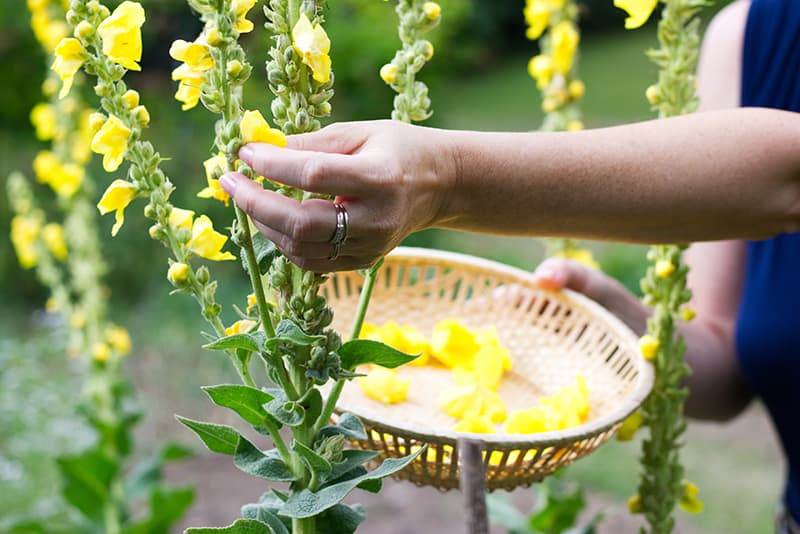
It has a rich, aromatic taste and is made from the leaves of the common mullein (Verbascum thapsus), a flowering plant native to Europe, Africa, and Asia.
This article examines the uses, benefits, and side effects of mullein tea — and tells you how to make it.
Potential Benefits And Uses Of Mullein Tea
Mullein tea has been linked to several potential health benefits.
May Treat Respiratory Conditions
Mullein has been used for thousands of years to treat respiratory conditions.
It may be especially effective at relieving asthma, which causes your airway to swell and results in symptoms like coughing, wheezing, and shortness of breath (4).
Animal and human research suggest that mullein tea works by reducing inflammation, thereby helping relax the muscles in your respiratory tract (5, 6).
The flowers and leaves of the plant are also used to treat other respiratory ailments, such as tuberculosis, bronchitis, tonsillitis, and pneumonia. However, no human research has studied whether mullein combats these conditions (3).
May Help Fight Viral Infections
Some test-tube studies suggest that mullein may possess powerful antiviral properties.
For instance, one test-tube study analyzed several medicinal herbs and found that mullein extract was particularly effective against the influenza virus (7).
Other test-tube studies show that mullein extract may also fight pseudorabies, a virus in the herpes family (8, 9).
Nonetheless, human research is needed.
Possesses Antibacterial Properties
Mullein tea may offer antibacterial effects as well.
One test-tube study found that mullein extract inhibited several strains of bacteria, including Bacillus cereus, which commonly occurs in soil and food (10, 11).
Another test-tube study noted that mullein extract reduced the growth of certain types of bacteria that cause infections, such as E. coli and Streptococcus pyogenes (12).
Although limited human research is available, one study in 180 children indicated that this herb may treat ear infections, which are often caused by bacteria (13).
This 3-day study, which used ear drops that contained mullein alongside several other herbal extracts 3 times daily, reduced ear pain by 93%, on average. However, it’s unclear to what extent this effect was due to mullein extract versus other herbs used in the ear drops (14).
Thus, additional human research is needed.
SUMMARY
Mullein may have antiviral and antibacterial properties and help treat certain respiratory conditions. However, further studies are necessary.
Potential Side Effects Of Mullein Tea
Most people can enjoy mullein tea safely with minimal risk of adverse effects.
Yet, the mullein plant may cause skin irritation for some people, so be sure to exercise caution if you’re handling the herb directly (15).
The tiny hairs of the plant can also irritate your throat, which is why it’s important to strain this tea thoroughly before drinking it.
Additionally, no research is available on mullein tea’s safety for women who are pregnant or breastfeeding. Thus, these populations should consult a healthcare professional before using it.
If you notice any negative side effects after drinking this tea, consider scaling back your intake or avoiding it.
SUMMARY
Mullein tea is widely considered safe and has few side effects. Still, you should strain your tea properly and exercise caution if handling the herb directly to prevent skin irritation.
How To Make It
You can find prepackaged mullein tea bags, extracts, capsules, tinctures, and dried leaves at many health stores, as well as online.
What’s more, many people grow mullein in their garden and dry the leaves on their own.
To make the tea with dried leaves, simply add a small handful of them to an 8-ounce (240-ml) cup of boiling water, then steep them for 15–30 minutes. To prevent throat irritation, use a strainer or cheesecloth to remove as many of the leaves as possible.
If you desire, you can add raw honey, cinnamon, or a lemon wedge.
SUMMARY
Mullein tea is easy to make with dried leaves or a teabag, though you should be sure to strain the leaves.
Mullein tea is made from the leaves of the mullein plant.
Although research in humans is limited, test-tube studies suggest that it may relieve certain respiratory conditions, such as asthma, and even fight viruses and bacteria.
This flavorful tea is easy to make at home and associated with very few side effects.
Important Notice: This article was also published at www.healthline.com by Rachael Ajmera, MS, RD where all credits are due. Medically reviewed by Adda Bjarnadottir, MS, RDN (Ice)
Disclaimer
The watching, interacting, and participation of any kind with anything on this page does not constitute or initiate a doctor-patient relationship with Veripeudic.com. None of the statements here have been evaluated by the Food and Drug Administration (FDA). The products of Veripeudic.com are not intended to diagnose, treat, cure, or prevent any disease. The information being provided should only be considered for education and entertainment purposes only. If you feel that anything you see or hear may be of value to you on this page or on any other medium of any kind associated with, showing, or quoting anything relating to Veripeudic.com in any way at any time, you are encouraged to and agree to consult with a licensed healthcare professional in your area to discuss it. If you feel that you’re having a healthcare emergency, seek medical attention immediately. The views expressed here are simply either the views and opinions of Veripeudic.com or others appearing and are protected under the first amendment.
Veripeudic.com promotes evidence-based natural approaches to health, which means integrating her individual scientific and clinical expertise with the best available external clinical evidence from systematic research. By individual clinical expertise, I refer to the proficiency and judgment that individual clinicians acquire through clinical experience and clinical practice.
Veripeudic.com does not make any representation or warranties with respect to the accuracy, applicability, fitness, or completeness of any multimedia content provided. Veripeudic.com does not warrant the performance, effectiveness, or applicability of any sites listed, linked, or referenced to, in, or by any multimedia content.
To be clear, the multimedia content is not intended to be a substitute for professional medical advice, diagnosis, or treatment. Always seek the advice of your physician or other qualified health providers with any questions you may have regarding a medical condition. Never disregard professional medical advice or delay in seeking it because of something you have read or seen in any website, video, image, or media of any kind. Veripeudic.com hereby disclaims any and all liability to any party for any direct, indirect, implied, punitive, special, incidental, or other consequential damages arising directly or indirectly from any use of the content, which is provided as is, and without warranties.

