
With a sweet, tangy flavor, this tropical fruit is super versatile and high in antioxidants.
Around the world, tamarind fruit is a key ingredient in popular and culturally significant dishes both savory and sweet.
It’s one of the key ingredients in sinigang, a savory Filipino stew, and imli or saunth chutney, a sweet chutney that complements fried snacks in India and Pakistan. It’s also used in beverages like agua fresca, which abounds in Mexico and parts of Latin America, and sharbat, a chilled cordial often served during Ramadan.
But tamarind comes from a tree that can only survive in tropical and subtropical climates, so depending on where you live, you may not be as familiar with it as you are with other fruits.
Registered dietitian Devon Peart, RD, MHSc, explains what tamarind is and what health benefits it may provide so you can start incorporating this versatile fruit into your diet.
What Is Tamarind?
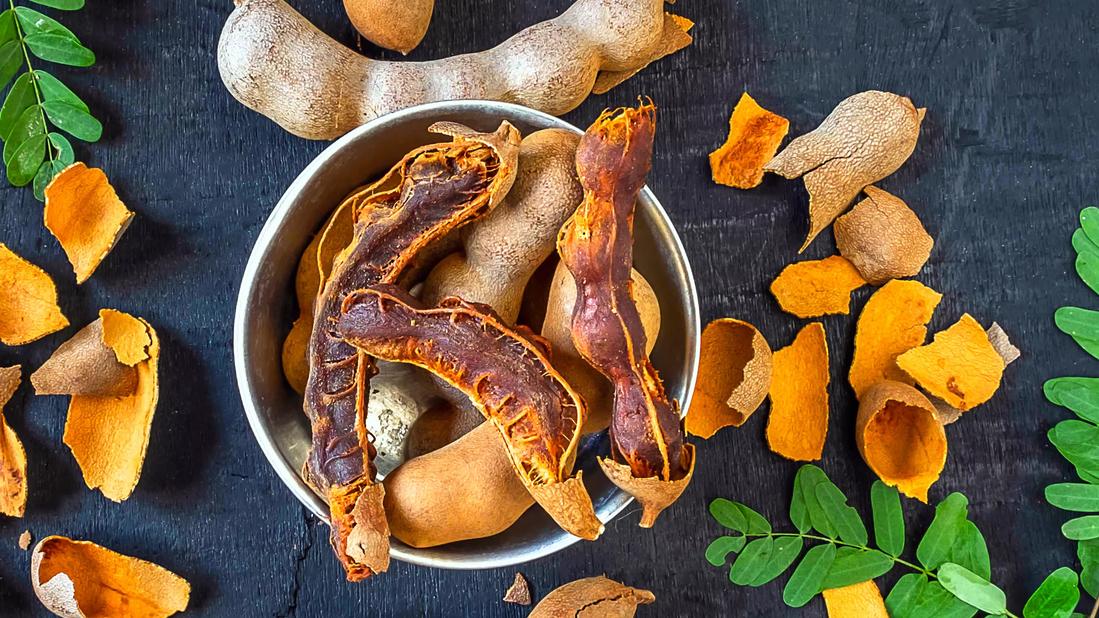
Tamarind fruit is a pod-like legume from the tamarind tree (Tamarindus indica). Its hard shell looks like a long peanut shell or a brown edamame (soybean) pod, but inside is a fleshy pulp with a texture kind of like a date.
“Tamarind is both sweet and tangy,” Peart says. “It’s sweeter or sourer depending on how ripe it is. The riper the fruit, the sweeter the taste.”
Tamarind trees are native to tropical areas of Africa, but they now grow in other warm climates, too, including South Asia, Mexico and parts of Central America.
Health Benefits Of Tamarind
You already know that fruit is healthy. But what’s so great about tamarind in particular?
“Tamarind is rich in antioxidants and high in calcium, fiber and magnesium,” Peart shares.
Tamarind’s nutritional profile makes it clear that it can be a healthy addition to your diet. So, if you’re ready to get snacking or to start cooking, consider this your all-clear to give it a go.
“Tamarind is nutrient-rich, so, on balance, it’s a healthy food when you enjoy it in moderation,” Peart adds. “Just stick to one serving at a time, which is half a cup.”
Here’s a look at what that means for you and some of the potential and proven health benefits of tamarind.
Full Of Antioxidants
Antioxidants are naturally occurring chemicals found in some foods. They help your body fight cellular damage from free radicals, unstable molecules that can cause oxidative stress and can lead to disease and other health issues, including:
- Autoimmune diseases.
- Cardiovascular and inflammatory disease.
- Cataracts.
- Cancer.
- Neurodegenerative diseases, like Alzheimer’s and Parkinson’s.
But antioxidants pair up with free radicals and prevent them from going rogue inside your body. That means they have big overall benefits for your health — and tamarind is full of them. It’s especially high in an antioxidant called beta-carotene, which supports eye health.
Good Source Of Magnesium
One serving of tamarind offers more than 25% of your recommended daily amount of magnesium.
This important nutrient supports more than 300 essential processes in your body, including regulating nerve and muscle function, maintaining blood pressure control and maintaining strong bones.
Helps Reduce Inflammation
Inflammation in the body is associated with all sorts of risks, including injury, illness and chronic diseases. But reducing inflammation reduces your risks — and your diet can go a long way in helping that.
“Tamarind pulp is rich in potassium and polyphenols, like flavonoids, which reduce inflammation,” Peart says. Flavonoids are natural plant chemicals with antioxidant properties, and antioxidants are one of the key fighters against inflammation.
That doesn’t mean that tamarind alone will be the superhero you need to combat inflammation. But it can definitely help.
May Play A Role In Obesity Therapy
Tamarind seeds in particular may play a role in helping manage and treat obesity.
“Obesity triggers metabolic and hormonal changes related to low-grade, chronic inflammation,” Peart explains. “Tamarind is a powerful anti-inflammatory that contains trypsin inhibitor, a molecule involved in hunger and satiety hormones that can essentially lead to a feeling of fullness.”
More studies are needed to determine exactly how and whether trypsin inhibitors have a role to play in obesity treatment, but some of the evidence is promising so far.
May Be Good For People With Diabetes
If you have diabetes, you’re probably already familiar with the glycemic index. It classifies foods with carbohydrates in them based on whether they’re likely to raise your blood sugar.
Foods that rank low on the glycemic index are less likely to cause your blood sugar to rise quickly, making them a good choice for your diet. This is especially important if you have diabetes — and tamarind may be one of those foods. Right now, there’s limited evidence of this possible benefit, but researchers continue to study it.
“Tamarind is relatively high in sugar, at 34 grams per half cup,” Peart notes, “but it’s also low on the glycemic index, which means that it doesn’t cause spikes in blood sugar. Its potential role in diabetes management is still being sorted out.”
How To Try Tamarind
Tamarind is sold in a few forms, and which is right for you depends on how you want to use it.
“If you want to eat tamarind raw, you can just break open the pod and eat the pulp from around the seed,” Peart explains. As with edamame, the pods themselves are inedible (but they’re compostable!).
You can also make your own tamarind paste by boiling and straining the pulp, which can then be used as a dip or added to other dishes.
“To make a paste in its pure form, the only thing you should add to the tamarind is water,” Peart says. “It’s as nutrient-rich as the raw plant.”
If that sounds like too much work and you want to use tamarind as an ingredient in cooking, you can also buy it in various forms like:
- Paste.
- Powder.
- Concentrate.
- Compressed block (a thick slab of packed pulp with the seeds and pods removed).
Just be sure to steer clear of any variety made with added sugar. “If you buy ready-made paste or concentrate, other ingredients may be added,” Peart warns, “so be sure to check the ingredient label first.”
Important Notice: This article was originally published at https://health.clevelandclinic.org where all credits are due.
Disclaimer
The watching, interacting, and participation of any kind with anything on this page does not constitute or initiate a doctor-patient relationship with Veripeudic.com. None of the statements here have been evaluated by the Food and Drug Administration (FDA). The products of Veripeudic.com are not intended to diagnose, treat, cure, or prevent any disease. The information being provided should only be considered for education and entertainment purposes only. If you feel that anything you see or hear may be of value to you on this page or on any other medium of any kind associated with, showing, or quoting anything relating to Veripeudic.com in any way at any time, you are encouraged to and agree to consult with a licensed healthcare professional in your area to discuss it. If you feel that you’re having a healthcare emergency, seek medical attention immediately. The views expressed here are simply either the views and opinions of Veripeudic.com or others appearing and are protected under the first amendment.
Veripeudic.com promotes evidence-based natural approaches to health, which means integrating her individual scientific and clinical expertise with the best available external clinical evidence from systematic research. By individual clinical expertise, I refer to the proficiency and judgment that individual clinicians acquire through clinical experience and clinical practice.
Veripeudic.com does not make any representation or warranties with respect to the accuracy, applicability, fitness, or completeness of any multimedia content provided. Veripeudic.com does not warrant the performance, effectiveness, or applicability of any sites listed, linked, or referenced to, in, or by any multimedia content.
To be clear, the multimedia content is not intended to be a substitute for professional medical advice, diagnosis, or treatment. Always seek the advice of your physician or other qualified health providers with any questions you may have regarding a medical condition. Never disregard professional medical advice or delay in seeking it because of something you have read or seen in any website, video, image, or media of any kind. Veripeudic.com hereby disclaims any and all liability to any party for any direct, indirect, implied, punitive, special, incidental, or other consequential damages arising directly or indirectly from any use of the content, which is provided as is, and without warranties.



